Soils Washing: A Sustainable Solution for Managing and Reusing Contaminated Soil
Discover how soils washing technology removes contaminants from excavated soil, reduces landfill waste, and supports sustainable construction and mining projects
Author: [Ramadhani Santoso - ramadhani@meta-mineral.com]
Category: Mineral Processing | environment
Soils Washing: Transforming Contaminated Soil into a Valuable Resource
As environmental regulations become more stringent and sustainable development gains momentum, industries are seeking innovative ways to manage contaminated soil. Soils washing has emerged as one of the most effective remediation technologies, enabling organizations to clean, reuse, and recover soil that would otherwise be sent to landfills.
Whether contaminated by heavy metals, hydrocarbons, construction debris, or industrial waste, soils washing provides an environmentally responsible and cost-effective alternative to traditional disposal methods.
What is Soils Washing?
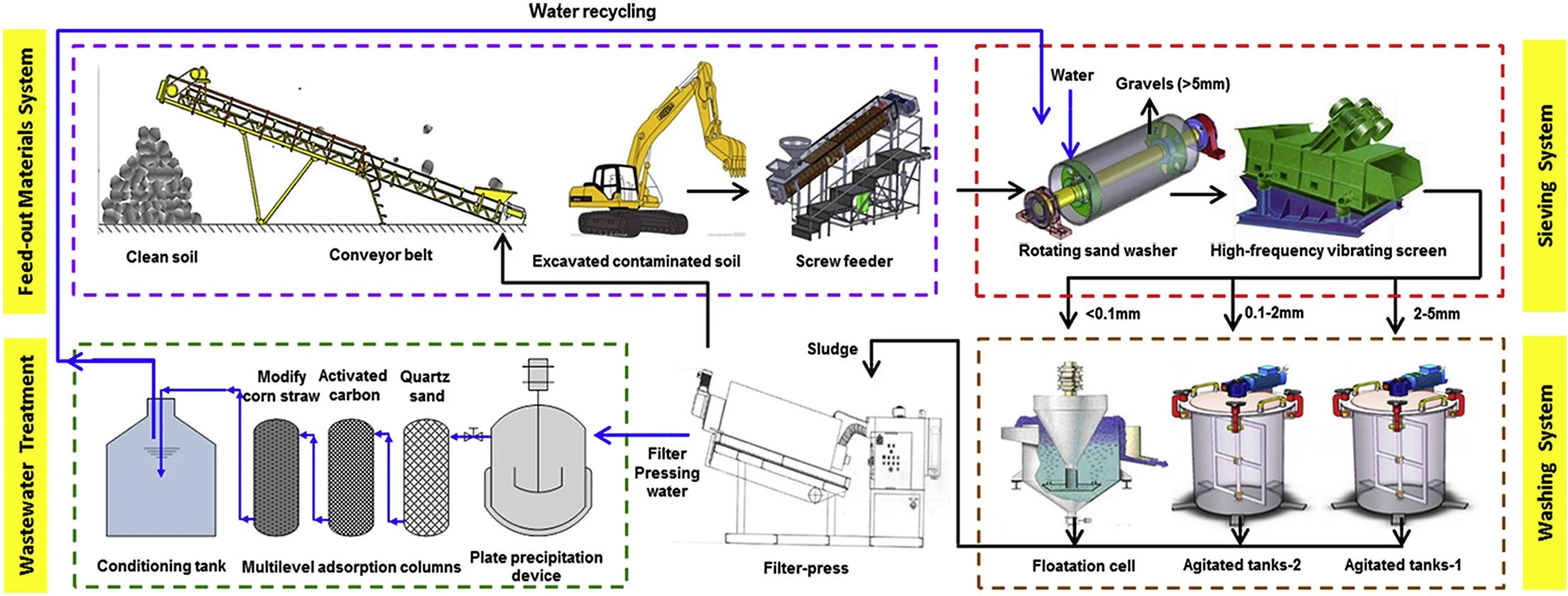
Soils washing is a physical and chemical treatment process that separates contaminants from soil particles through a combination of:
Mechanical screening
Particle size separation
Water-based washing
Chemical extraction (when necessary)
Dewatering and material recovery
The objective is to produce clean soil suitable for reuse while concentrating contaminants into a much smaller waste stream for specialized treatment or disposal.
This approach significantly reduces the amount of hazardous waste requiring landfill disposal.
Why is Soil Contamination a Growing Concern?
Soil contamination can result from:
Mining operations
Industrial manufacturing
Construction activities
Oil and fuel spills
Chemical storage facilities
Demolition waste
Urban redevelopment projects
Common contaminants include:
Heavy metals (Lead, Arsenic, Cadmium, Mercury)
Petroleum hydrocarbons
PAHs (Polycyclic Aromatic Hydrocarbons)
Pesticides
Industrial chemicals
Fine construction debris
Without proper remediation, contaminated soils may threaten groundwater, ecosystems, and public health.