Optimising Chute Design to Reduce Localised Wear and Extend Liner Life
Author: [Ramadhani Santoso - ramadhani@meta-mineral.com ]
Category: Chute Design, Chute Optimisation, Bulk Material Handling, Mineral Processing, Mining Engineering, Material Flow Analysis, Transfer Chute Design, Chute Liner, Wear Reduction, Impact Management, Bulk Solids Handling, Abrasion Resistance, Liner Life Optimisation, Mining Equipment Reliability, Material Transfer System, Structural Wear Analysis, Mining Maintenance, Process Optimisation
Material handling chutes play a critical role in maintaining reliable and efficient operations across mining and mineral processing plants. However, when coarse material impacts the chute surface in concentrated areas, the result can be severe localised wear, structural damage, and premature liner replacement.
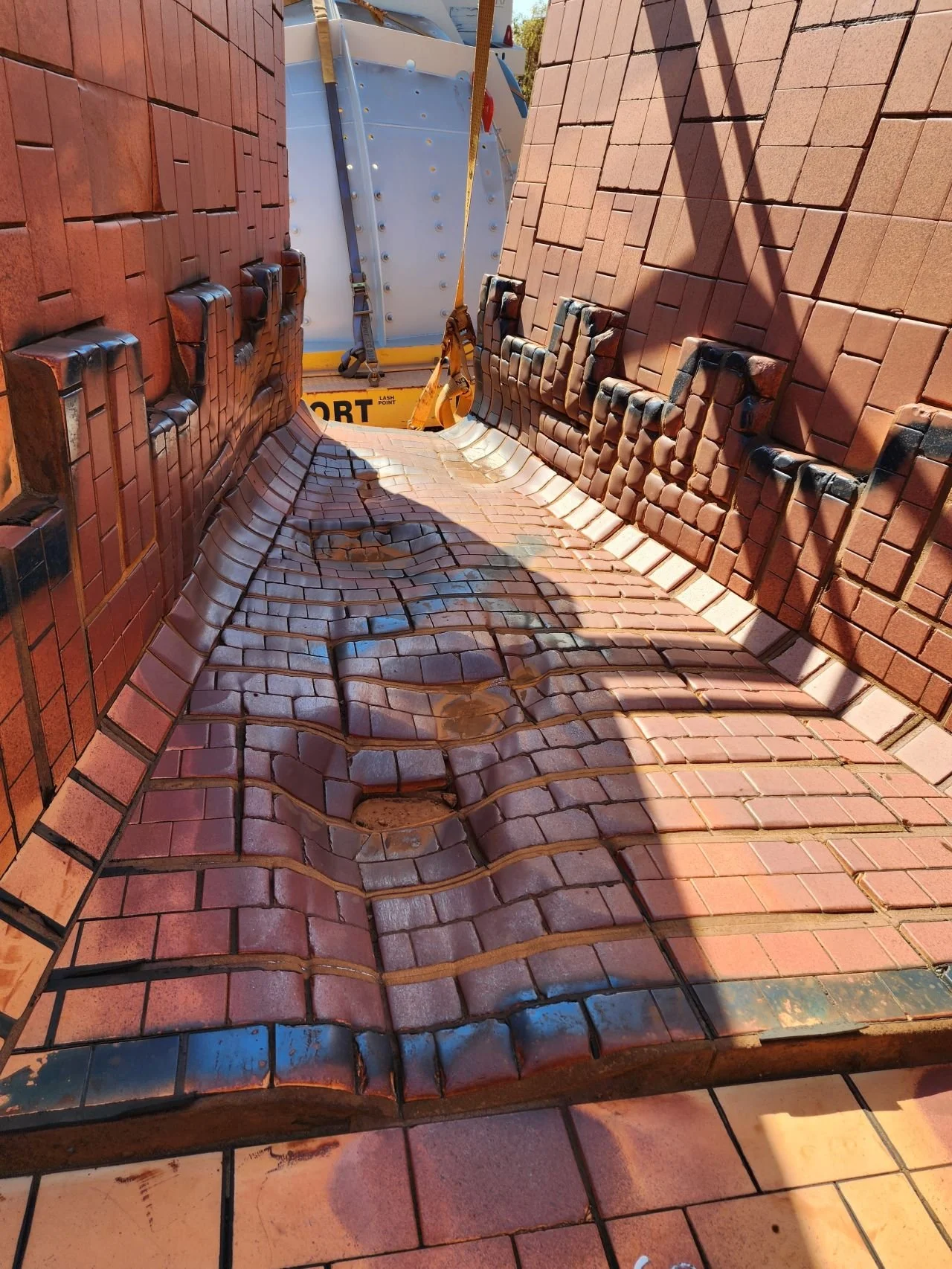
In many operations, a relatively small section of a chute may experience extreme impact and abrasion, while the majority of the liner system remains in good condition. This creates an inefficient maintenance cycle where an entire chute or liner arrangement may be replaced even though only a limited area has reached the end of its service life.
The Challenge of Localised Impact
High-impact, non-tangential material flow can concentrate energy into specific zones of a chute. Instead of allowing material to move smoothly across the available chute surface, the flow is directed toward limited impact areas.
This condition can result in:
Premature structural damage in high-impact zones
Rapid liner wear in concentrated areas
Underutilisation of the remaining chute surface
Replacement of liners that still have significant service life
Increased maintenance frequency and downtime
Higher operating and replacement costs
When approximately 80% of the chute liners remain in good condition, replacing the complete system represents a significant loss of available liner life.
Understanding Material Flow Behaviour
The root cause of premature chute failure is often not simply the selection of liner material. In many cases, the main issue is the way material enters, impacts, and travels through the chute.
An inefficient flow regime may cause material to:
Impact the chute at a high velocity and steep angle.
Concentrate impact energy in a small region.
Create excessive wear and structural loading.
Bypass other areas of the chute that could otherwise distribute the material load.
Cause early failure in a small section while the remaining liners experience minimal wear.
Improving chute performance therefore requires a detailed understanding of bulk material flow, impact behaviour, particle trajectories, and wear distribution.
Improving Chute Geometry and Impact Management
A properly engineered chute should guide material through a controlled flow path rather than allowing uncontrolled impact.
Potential improvements may include:
Redesigning chute geometry to improve material trajectories
Adjusting feed direction and transfer conditions
Increasing the effective surface area used by the material stream
Introducing controlled impact zones
Improving the angle of material contact to reduce impact energy
Optimising liner placement based on actual wear patterns
Using different liner materials for high-impact and high-abrasion zones
The objective is to distribute material more uniformly across the chute and reduce excessive loading on individual sections.
Using Engineering Analysis for Better Chute Performance
Advanced engineering tools such as Discrete Element Method (DEM) simulation and Computational Fluid Dynamics (CFD), where applicable, can provide valuable insight into material movement and impact behaviour.
These analyses can help engineers evaluate:
Material trajectories
Impact velocity and energy
Contact forces
Wear distribution
Material accumulation
Chute utilisation
Potential blockage areas
By identifying the areas exposed to the highest loads, the chute design can be modified before structural damage becomes a recurring operational problem.
Extending Chute and Liner Service Life
The most effective approach is not always to install thicker or harder liners. A better solution may be to reduce the impact energy before the material reaches the liner.
By improving material flow and distributing the load more evenly, operations can achieve:
Longer chute service life
Improved liner utilisation
Reduced maintenance costs
Lower frequency of liner replacement
Reduced unplanned downtime
More reliable material handling performance
A well-designed chute should ensure that wear is controlled and predictable rather than concentrated in a few critical locations.
Meta Mineral's Approach to Chute Optimisation
At Meta Mineral, we support mining and mineral processing operations through engineering analysis and optimisation of bulk material handling systems.
Our approach focuses on understanding the interaction between material characteristics, equipment geometry, operating conditions, and wear mechanisms. By analysing the actual material flow behaviour, we can identify the root causes of localised impact and develop practical engineering solutions to improve chute performance.
Whether the challenge involves excessive liner wear, structural damage, poor material distribution, or inefficient transfer performance, optimising the flow regime can significantly improve equipment reliability and asset life.
Conclusion
Premature chute and liner failure is often a symptom of an inefficient material flow pattern rather than simply a material selection problem. When impact energy is concentrated in small areas, localised damage can occur while the majority of the chute lining remains underutilised.
Through improved chute geometry, feed control, impact management, and engineering analysis, material can be distributed more uniformly across the chute surface. The result is improved liner utilisation, reduced wear concentration, longer equipment life, and a more efficient bulk material handling system.
Meta Mineral helps mining and mineral processing operations transform material handling challenges into engineered, reliable, and cost-effective solutions