Open-Pit to Underground Mining Transition: Managing One of Mining's Most Complex Engineering Projects
Author: [Ramadhani Santoso - ramadhani@meta-mineral.com ]
Category: Underground mining | Open-pit mining | Mine transition engineering | Crown pillar design | Geotechnical stability | Mining risk management | Underground mine planning | Surface to underground mining | Mining engineering | Mine life extension
As surface ore reserves become depleted, many mining operations face a critical decision: should mining continue underground?
Transitioning from open-pit mining to underground mining is one of the most technically demanding stages in a mine's life cycle. Unlike a greenfield underground project, this transition requires engineers to operate two fundamentally different mining methods simultaneously while maintaining safety, productivity, and economic viability.
Poorly managed transitions can result in slope failures, underground instability, excessive dilution, water inflows, ventilation problems, and significant financial losses. Conversely, a well-planned transition extends mine life and maximizes resource recovery.
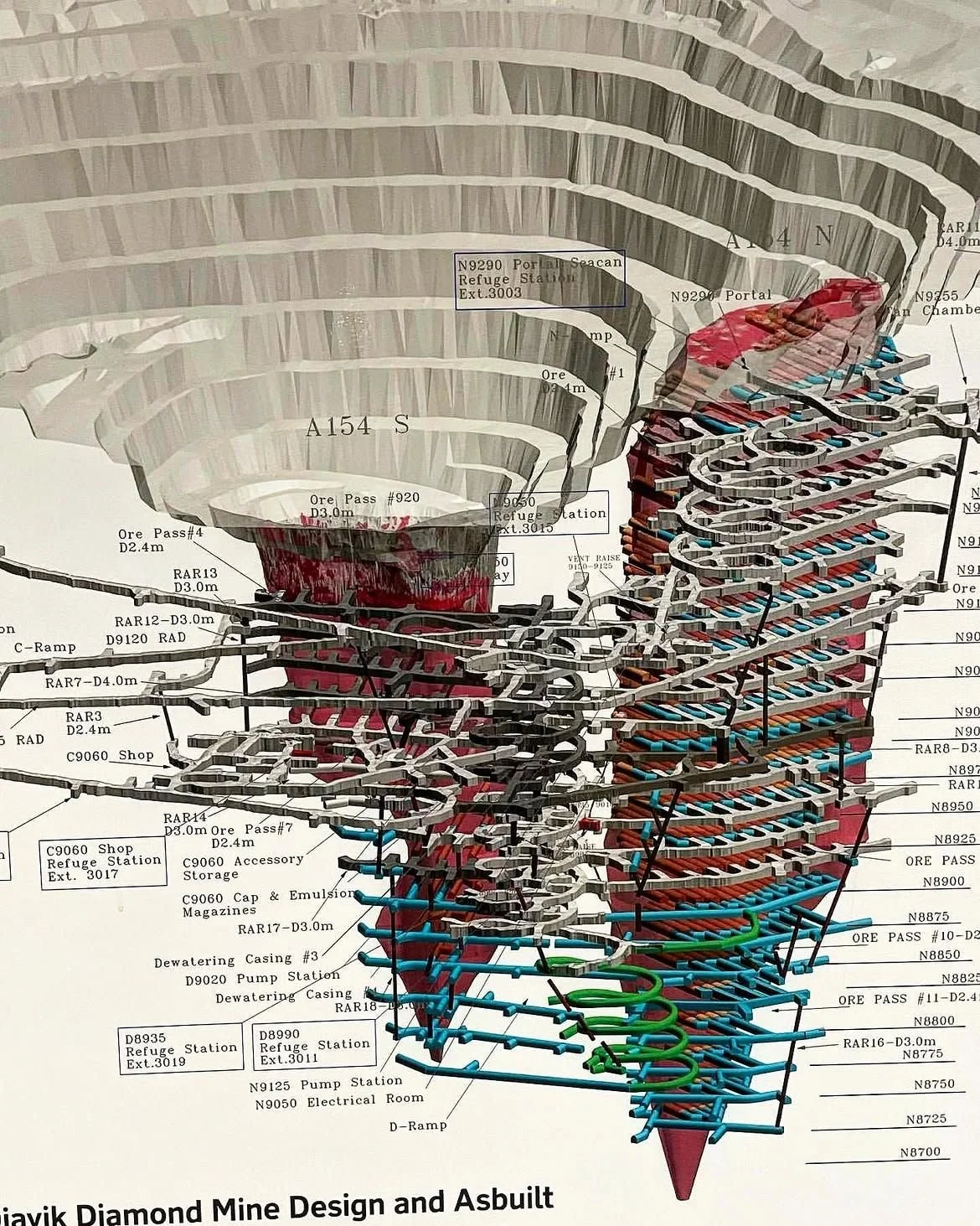
Understanding the Difference Between Open-Pit and Underground Mining
Open-pit mining extracts ore from the Earth's surface by progressively removing waste rock to expose mineralized zones. It is generally the preferred mining method for shallow ore bodies due to its lower operating costs and high production rates.
Underground mining, on the other hand, accesses deeper mineral deposits through shafts, declines, ramps, and tunnel networks. Although more expensive, underground mining becomes economically attractive once stripping ratios in the open pit become excessive.
The transition begins when both mining methods operate concurrently, creating unique engineering interactions that must be carefully managed.
Why Mines Transition Underground
Several factors drive the decision to move underground:
Surface ore reserves become exhausted.
Waste stripping costs increase beyond economic limits.
High-grade ore remains at greater depths.
Environmental or land-use constraints limit pit expansion.
Long-term mine life extension becomes economically attractive.
Rather than abandoning the remaining resource, underground mining allows companies to recover valuable ore that would otherwise remain inaccessible.
Engineering Challenges During Mine Transition
1. Geotechnical Stability
Perhaps the greatest challenge is maintaining stability between the open pit and underground workings.
As underground stopes are excavated beneath the pit, stress redistribution occurs throughout the rock mass. These stress changes may result in:
Pit wall deformation
Rock mass failure
Crown pillar instability
Surface subsidence
Underground rockbursts
Geotechnical engineers continuously monitor these risks using numerical modelling, slope monitoring radar, extensometers, microseismic systems, and geological mapping.
2. Crown Pillar Design
The crown pillar separates underground excavations from the base of the open pit.
An undersized crown pillar may collapse, causing:
Surface breakthrough
Massive dilution
Water ingress
Catastrophic safety incidents
Conversely, an oversized pillar leaves valuable ore unmined, reducing project economics.
Optimizing crown pillar thickness requires balancing safety with ore recovery through detailed rock mechanics analysis.
3. Simultaneous Mining Operations
Running surface and underground operations simultaneously introduces logistical complexity.
Typical conflicts include:
Shared haul roads
Equipment interactions
Blasting interference
Restricted access
Production scheduling conflicts
Integrated mine planning ensures both operations can coexist without compromising productivity or worker safety.
4. Groundwater Management
Water becomes increasingly problematic during transition.
Open pits naturally collect rainfall and groundwater, while underground excavations create additional drainage pathways.
Potential risks include:
Water inflow into underground workings
Pit flooding
Increased pore pressure
Reduced slope stability
Pumping capacity limitations
Comprehensive hydrogeological investigations and groundwater control systems are essential before underground development begins.
5. Ventilation Requirements
Unlike open pits, underground mines require engineered ventilation systems to maintain safe working conditions.
Engineers must design ventilation networks capable of removing:
Diesel exhaust
Dust
Heat
Toxic gases
Blast fumes
Ventilation planning becomes even more challenging when underground portals are located within or adjacent to active open pits.
Economic Considerations
Transition timing significantly impacts project profitability.
If underground mining begins too early:
Capital expenditure increases unnecessarily.
Surface mining efficiency declines.
If transition occurs too late:
High stripping ratios reduce profitability.
Valuable ore remains inaccessible.
Production interruptions become more likely.
Modern mine planning software integrates economic optimization with geotechnical constraints to determine the ideal transition depth.
Technology Supporting Safe Mine Transitions
Today's mining industry relies heavily on digital technologies to reduce transition risk.
Key technologies include:
3D geological modelling
Geotechnical numerical simulation
Laser scanning
Drone surveying
Slope stability radar
Microseismic monitoring
Ground movement sensors
Digital twin modelling
Real-time production tracking
These technologies enable engineers to monitor changing ground conditions and make proactive operational decisions.
Best Practices for Successful Mine Transition
Mining companies can reduce operational risk by following several best practices:
Conduct comprehensive geotechnical investigations before underground development.
Develop integrated open-pit and underground mine plans.
Optimize crown pillar design using numerical modelling.
Install continuous slope and ground movement monitoring systems.
Design robust groundwater management strategies.
Coordinate blasting schedules between mining methods.
Maintain clear communication between surface and underground teams.
Regularly update economic models as mining progresses.
The Future of Mine Transition Engineering
As shallow mineral deposits become increasingly scarce, more operations will transition to underground extraction. This trend makes transition engineering one of the fastest-growing disciplines in modern mining.
Advances in automation, artificial intelligence, digital twins, and real-time geotechnical monitoring are improving decision-making while reducing operational risks. These innovations allow mining companies to extend mine life, maximize resource recovery, and improve safety during one of the industry's most complex engineering phases.